Water Propagation: The Complete Beginner's Walkthrough
 Reviewed by
 If you've never rooted a cutting before, this is the method to start with. A jar, some water, and a healthy stem is all it takes — and because the roots grow where you can watch them, water propagation is the easiest way to learn what a cutting actually needs.
Why start with water
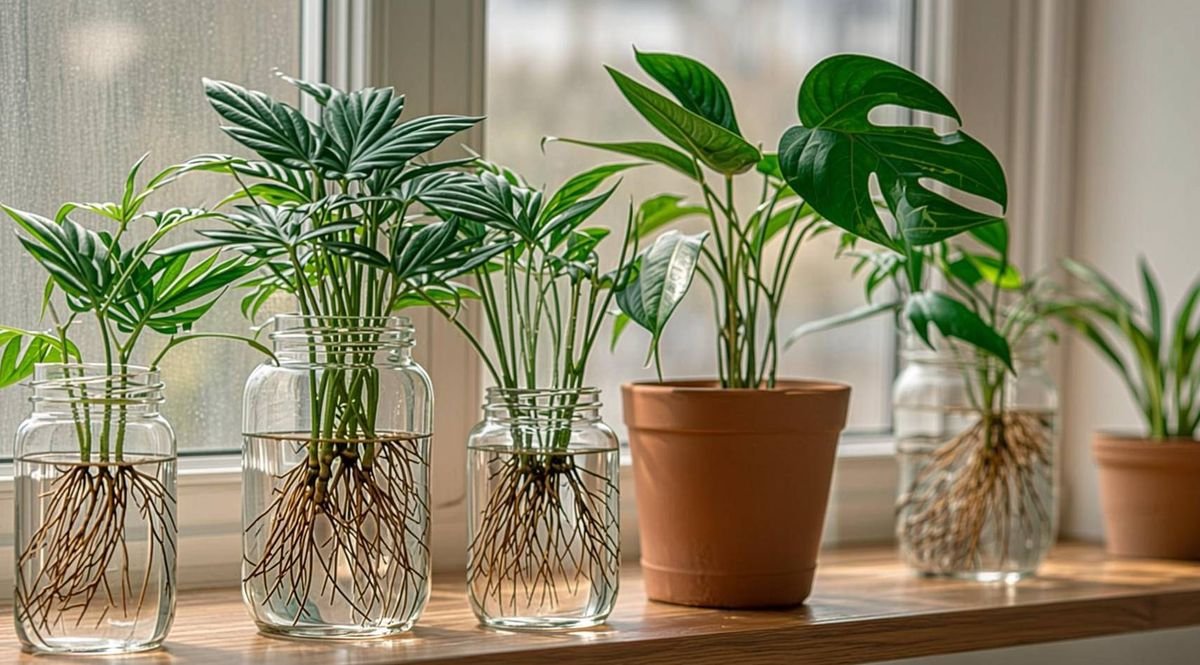
There are plenty of ways to root a cutting — soil, sphagnum moss, LECA, even air layering while it's still attached to the parent. Water is the one worth learning first for a simple reason: you can see everything. The stem, the node, the moment the first white root appears — it's all visible through the glass. When something goes wrong, you notice early instead of digging up a mystery from a pot of soil three weeks later.
It's also forgiving. You don't need special equipment, you don't need to buy anything, and you get near-instant feedback on whether your cutting is happy. Once you've watched a pothos root in a jar on your windowsill, every other method makes more sense. If you want the deeper comparison, we put water head-to-head with soil in soil vs water propagation — but for your first go, water wins on ease.
What you'll need
Genuinely, this is the whole list. Nothing here is fancy, and you almost certainly own most of it already.
- A healthy parent plant. Take cuttings from a plant that's actively growing, not one that's stressed or sickly.
- Clean scissors or snips. Wipe the blades first. A ragged, dirty cut is the fastest route to rot.
- A clear glass jar. Clear so you can watch the roots; glass because it's easy to keep clean. A drinking glass or jam jar is perfect.
- Room-temperature water. Tap water is fine for almost everyone — more on the rare exceptions in tap vs filtered vs rainwater.
The 7 steps, start to finish
Here's the whole process. The active part takes about five minutes; the rest is just waiting and changing the water.
Find a node
This is the single most important part, and the step most beginners skip. A node is the small bump or joint on the stem where a leaf or side-shoot grows out. Roots emerge from nodes — not from bare stem, and not from leaves. No node in the water means no roots. If you're not sure what you're looking at, stem cuttings 101 walks through spotting one on any plant.
Take the cutting
Cut cleanly about a centimetre below a node, so that node ends up on your cutting. Keep two or three leaves near the top for energy, and strip off any lower leaves that would otherwise sit under the waterline. A cutting with one node and a couple of leaves roots beautifully.
Prepare the jar
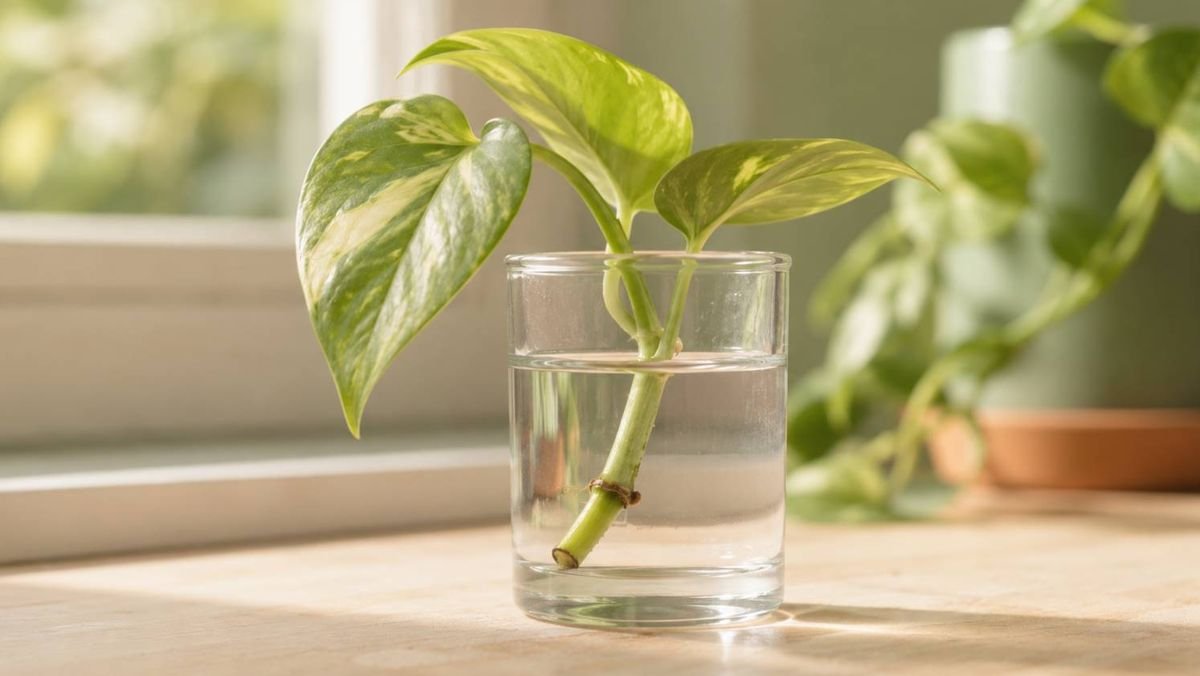
Fill your clear jar with room-temperature water. You want at least one node submerged, with all the leaves comfortably above the surface. If the cutting is top-heavy and wants to tip out, a jar with a narrower neck helps hold it upright.
Position it in bright, indirect light
Set the jar somewhere with plenty of light but out of harsh, direct sun — a spot near a window that gets bright ambient daylight is ideal. Direct midday sun heats the water and encourages algae; deep shade slows everything down. A normal, well-lit room shelf is exactly right.
Change the water every few days
Fresh water carries oxygen, and oxygen is what keeps the cutting from rotting while it works on roots. Tip out the old water and refill every three to five days, or sooner if it looks cloudy. This one habit prevents the majority of failed cuttings.
Wait and watch for roots
Now you just observe. Within one to three weeks on an easy plant, you'll see tiny white nubs push out from the node, then lengthen into proper roots. Resist the urge to lift the cutting out every day to inspect it — a quick daily glance through the glass is plenty.
Pot it up
Once the roots are roughly one to two inches long, the cutting is ready for soil. Water roots are a little different from soil roots, so move gently and keep the new pot well-watered for the first couple of weeks while it adjusts. The exact timing question — and how to avoid a sulky, drooping cutting — is covered in when to move a cutting from water to soil.
Best plants for water propagation
Not every houseplant loves water rooting, but the most popular ones are also the easiest. If you're choosing your very first cutting, start with something from the top of this table.
| Plant | Difficulty | Roots appear in |
|---|---|---|
| Pothos | Very easy | 1–2 weeks |
| Heartleaf philodendron | Very easy | 1–2 weeks |
| Spider plant (plantlets) | Very easy | 1–2 weeks |
| Tradescantia | Very easy | Under 1 week |
| Monstera (node cutting) | Easy | 2–4 weeks |
| Fiddle leaf fig | Slow & fussy | 6–10 weeks |
| Snake plant (leaf section) | Slow | 4–8 weeks |
If you want the friendliest possible starting point, take a pothos cutting — we have a dedicated pothos propagation guide that also shows how cutting it makes the parent plant bushier. For a full set of realistic timings across more plants, see how long propagation takes.
Mistakes to avoid
Almost every failed water cutting comes down to one of these, and all of them are easy to sidestep once you know them:
- No node under the water. Leaves and bare stem won't produce roots. Double-check before you walk away.
- Leaves sitting in the water. Submerged leaves rot and foul the water fast. Strip the lower ones.
- Never changing the water. Stale, oxygen-poor water is the number-one cause of a mushy, rotting stem.
- Too much direct sun. It cooks the water and invites algae.
If your cutting has already turned soft and brown at the bottom, don't panic — it's usually salvageable. Our guide on why cuttings rot instead of rooting walks through trimming back to healthy tissue and starting the clock again.
Common questions
How long does water propagation take?
Most easy houseplants like pothos and philodendron show their first roots in one to three weeks and are ready to pot in three to six weeks. Slower plants such as fiddle leaf figs and snake plants can take a couple of months, so patience is part of the method.
Do I need rooting hormone for water propagation?
No. For easy plants it makes almost no difference — they root readily on their own. Rooting hormone can give slower, woodier cuttings a small nudge, but it's optional. We break down when it's actually worth using in our rooting hormone guide.
Why is my cutting rotting instead of rooting?
Rot almost always traces back to stale water, no node below the surface, or leaves sitting underwater. Change the water every few days, keep only the node submerged, and strip the lower leaves. If it's already started, trim back to firm green tissue and begin again.
Can I just leave the cutting in water forever?
You can, and some people keep pretty jars of cuttings on purpose. But water roots are adapted to water, so the plant grows slowly and won't thrive long-term. For a full, healthy plant, move it to soil once the roots are one to two inches long.