When to Move a Cutting from Water to Soil
 Reviewed by
 Your water cutting has roots — now what? Move it at the right moment and it barely skips a beat. Here's the simple timing window and how to pot up gently.
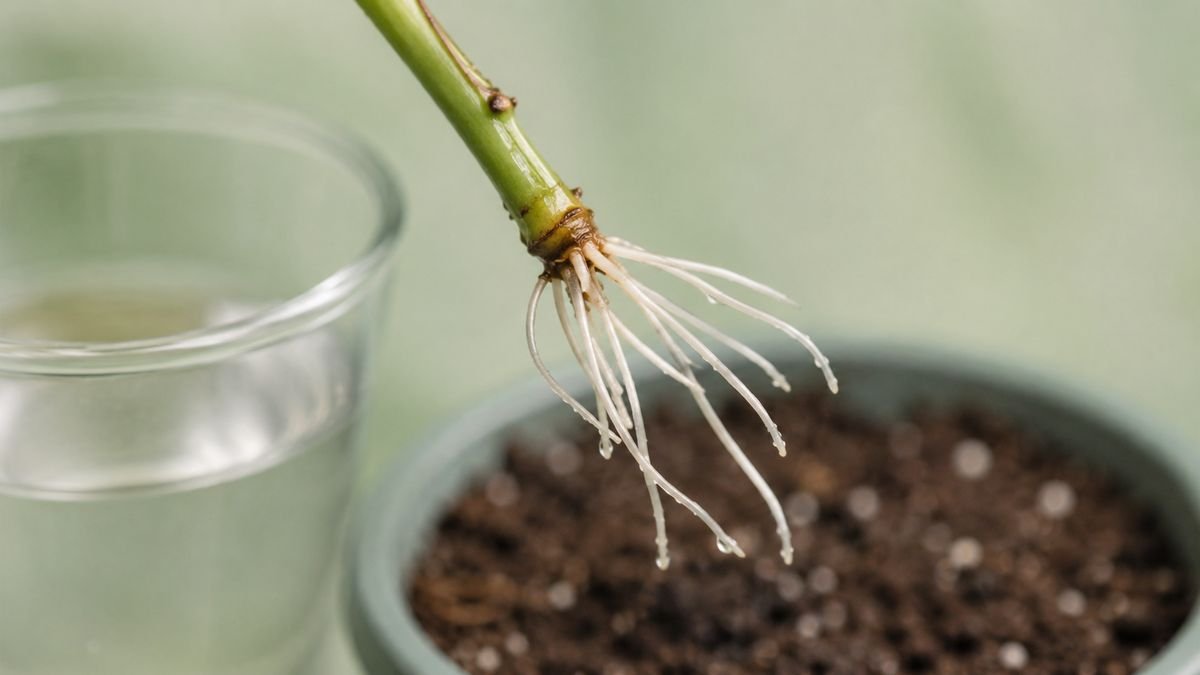
Your water cutting has roots — now what? Moving it to soil at the right moment makes the difference between a cutting that carries on happily and one that sulks for weeks. The good news is the timing window is simple once you know what to look for.
The sweet spot
Move a water cutting to soil when its roots are roughly one to two inches long. That's the sweet spot: enough root to anchor and support the plant, but young enough that the roots adapt easily to soil. This window works for almost every houseplant. You don't need to measure precisely — a small handful of roots an inch or two long, with a bit of branching starting, is your green light.
Too early vs too late
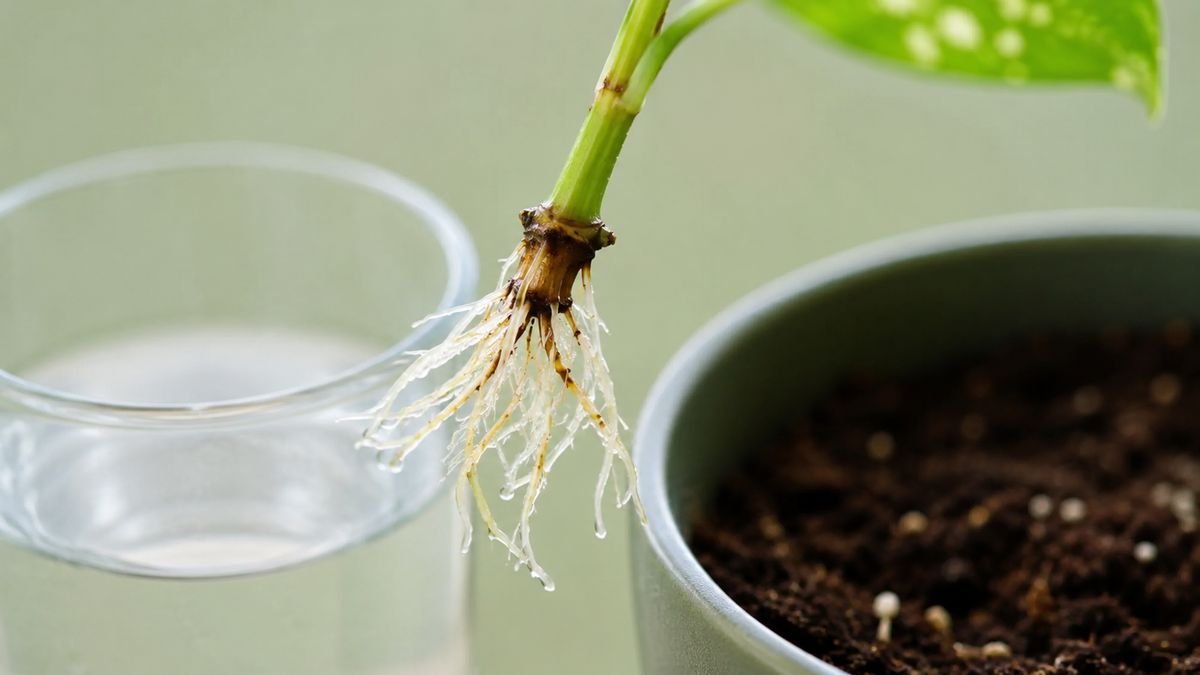
Too early — potting a cutting with just tiny root nubs risks it stalling, because it doesn't yet have enough root to draw moisture from soil. Too late is the more common mistake: leaving a cutting until its water roots are long and lush feels safe, but those established water roots struggle to convert to soil life, so the plant sulks and can drop leaves after potting. Long water roots are actually a disadvantage at transplant time. Aim for the middle — short, young roots move best.
Signs it's ready
- Roots are roughly one to two inches long.
- There are several roots, not just one lonely strand.
- The roots are starting to branch or show fine side-roots.
- The cutting looks healthy and firm, with no rot.
Moving it gently
Prepare a light mix first
Have a pot of moist, airy propagation mix ready before you lift the cutting, so its roots aren't exposed for long.
Make a hole and settle the roots
Poke a hole, lower the roots in gently without cramming, and backfill so the cutting stands on its own.
Firm and water in
Lightly firm the soil and water thoroughly to settle it around the roots and remove air gaps.
Place in bright indirect light
Keep it out of harsh sun while it adjusts to its new home.
The first two weeks
Water roots need to grow into soil roots, so the first two weeks are an adjustment period. Keep the soil consistently moist — not soggy — during this time, because the young roots are used to constant water. A little wilting or drooping in the first days is normal transplant shock, not failure. Once you see new leaf growth, the cutting has settled and you can ease back to normal watering. If you'd rather skip this transition altogether, propagating directly in soil avoids it — see the soil vs water comparison.
Common questions
When should I move a water cutting to soil?
When its roots are roughly one to two inches long, with several roots starting to branch. That's young enough to adapt easily but established enough to support the plant.
Can I leave a cutting in water too long?
Yes. Long, established water roots struggle to convert to soil, so the plant can sulk or drop leaves after potting. Pot up while the roots are still short.
Why did my cutting droop after potting?
That's normal transplant shock as water roots adapt to soil. Keep the soil moist and give it bright indirect light; new growth means it has settled.
How do I stop transplant shock?
Pot up early with short roots, keep the mix consistently moist for two weeks, and avoid harsh sun. Extra humidity helps too.