How Long Should Propagation Take? (Real Timelines)
 Reviewed by
 Some cuttings root in days, others take months. Here are realistic timelines by plant and method, so you know whether to relax or start troubleshooting.
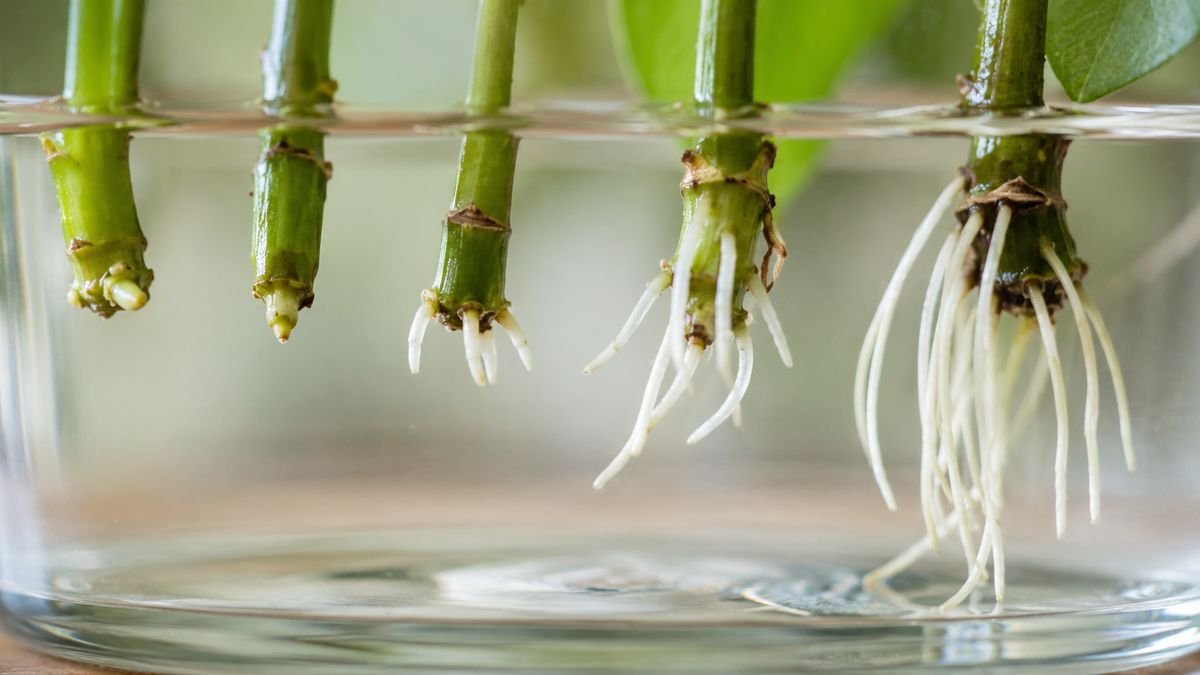
"How long until my cutting has roots?" is the question every propagator asks, usually while staring impatiently at a jar. The honest answer is: it depends enormously on the plant, the method and the season. Some cuttings root in days; others take months. Here are realistic timelines so you know whether to relax or troubleshoot.
The honest answer
There's no single propagation timeline, and that's the most important thing to understand. An easy trailing plant like pothos can show roots in under a week, while a woody or succulent plant might take two or three months for the same milestone. Knowing your specific plant's normal pace is what stops you either panicking too early or waiting on a cutting that's genuinely stalled. Match your expectations to the plant, and most "problems" disappear.

Timelines by plant
Rough guides for first visible roots in water at normal room temperature. Cooler rooms and winter will push these longer.
| Plant | First roots | Ready for soil |
|---|---|---|
| Pothos | 1–2 weeks | 3–5 weeks |
| Philodendron | 1–2 weeks | 3–5 weeks |
| Tradescantia | Under a week | 2–3 weeks |
| Monstera | 2–4 weeks | 6–10 weeks |
| Snake plant | 3–8 weeks | 2–4 months |
| Fiddle leaf fig | 3–6 weeks | 2–3 months |
| ZZ (leaf) | 2–4 months | 4–9 months |
| Succulent leaf | 2–4 weeks | 1–3 months |
What speeds it up
- Warmth. Rooting is temperature-driven; a warm room roots cuttings noticeably faster than a cold one.
- Bright indirect light. Enough light powers the process — a dim corner drags it out. In winter a grow light helps.
- The growing season. Spring and summer cuttings root fastest, riding the plant's natural growth push.
- A good node. A cutting with a healthy node submerged roots far quicker than a poorly chosen one.
What slows it down
Cold, winter, deep shade, and naturally slow species are the big four. A snake plant cutting in a chilly December window might sit for two months looking untouched — and that's completely normal for the conditions. Woody and succulent plants are simply slow by nature, no matter what you do. If your cutting is within the ranges above, there's nothing to fix; it's working on plant time, not human time. Only when a cutting sits well beyond its normal window with no progress should you reach for the troubleshooting checklist.
The patience mindset
The single most common propagation mistake is impatience — pulling cuttings out to check, restarting too soon, or assuming failure at week two when the plant needs eight. Roots grow on their own schedule and can't be rushed by fussing. Set the jar somewhere you'll see it, top up the water, and let time do the work. The water propagation walkthrough covers the simple upkeep; beyond that, the best tool is patience.
Common questions
How long does it take for cuttings to root?
It varies widely. Easy plants like pothos root in one to two weeks; snake plants and figs take one to three months; a ZZ leaf can take several months. Match expectations to the plant.
Why is my cutting taking so long to root?
Usually cold, low light, winter, or simply a naturally slow plant. If it's within the normal range for its species, nothing is wrong — it just needs time.
Do cuttings root faster in water or soil?
Water often shows first roots slightly sooner and lets you watch, but the difference is small. Warmth, light and season affect speed far more than the medium.
Can I speed up propagation?
Yes, somewhat — keep cuttings warm, in bright indirect light, and propagate in the growing season. But naturally slow plants stay slow no matter what.