Tap vs Filtered vs Rainwater for Rooting
 Reviewed by
 You'll be told your tap water is killing your cuttings. Usually it isn't. Here's the honest truth about water for rooting — and the one factor that matters far more.
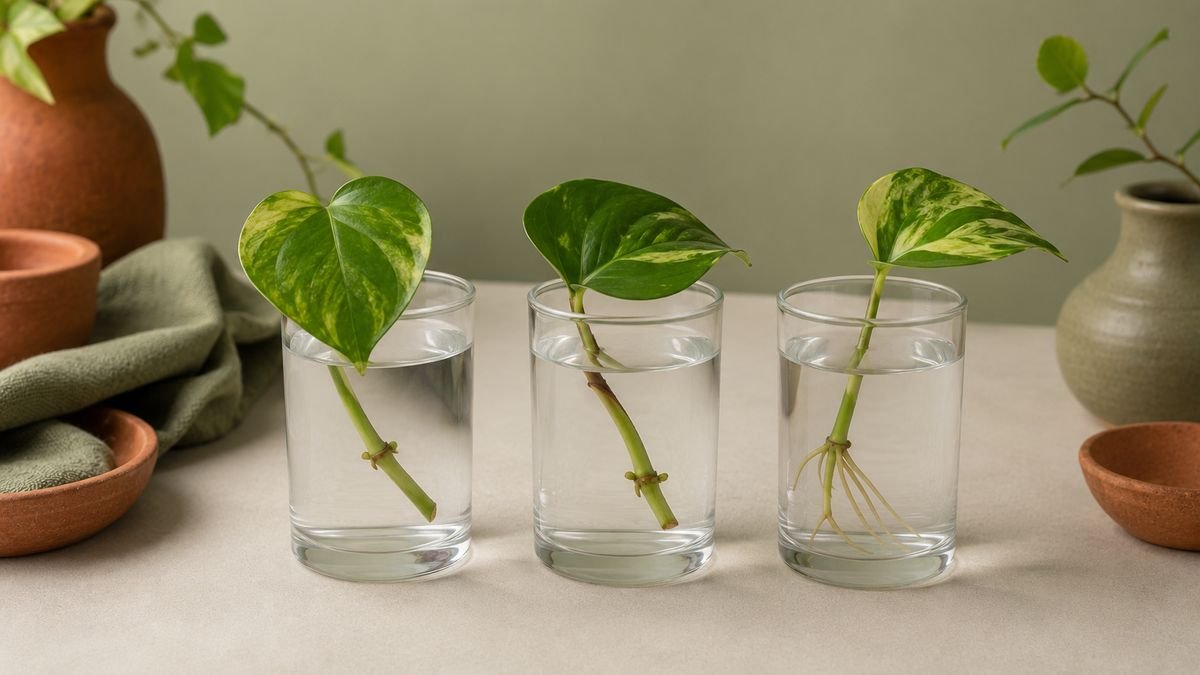
Somewhere online, someone will tell you your cuttings are failing because of your tap water. Usually, they're wrong. For the vast majority of houseplant cuttings, plain tap water is completely fine — but there are a couple of genuine exceptions worth knowing, and one factor that matters far more than which tap you use.
Does water type even matter?
For most cuttings, no. A pothos doesn't care whether it roots in tap, filtered or rainwater — it'll grow roots in a forgotten glass by the sink regardless. Cuttings are tough and undemanding at the rooting stage, and the water quality debate is mostly overblown. Before you buy filters or collect rainwater, know that plain tap water roots the overwhelming majority of houseplants without any trouble at all.
The truth about tap water
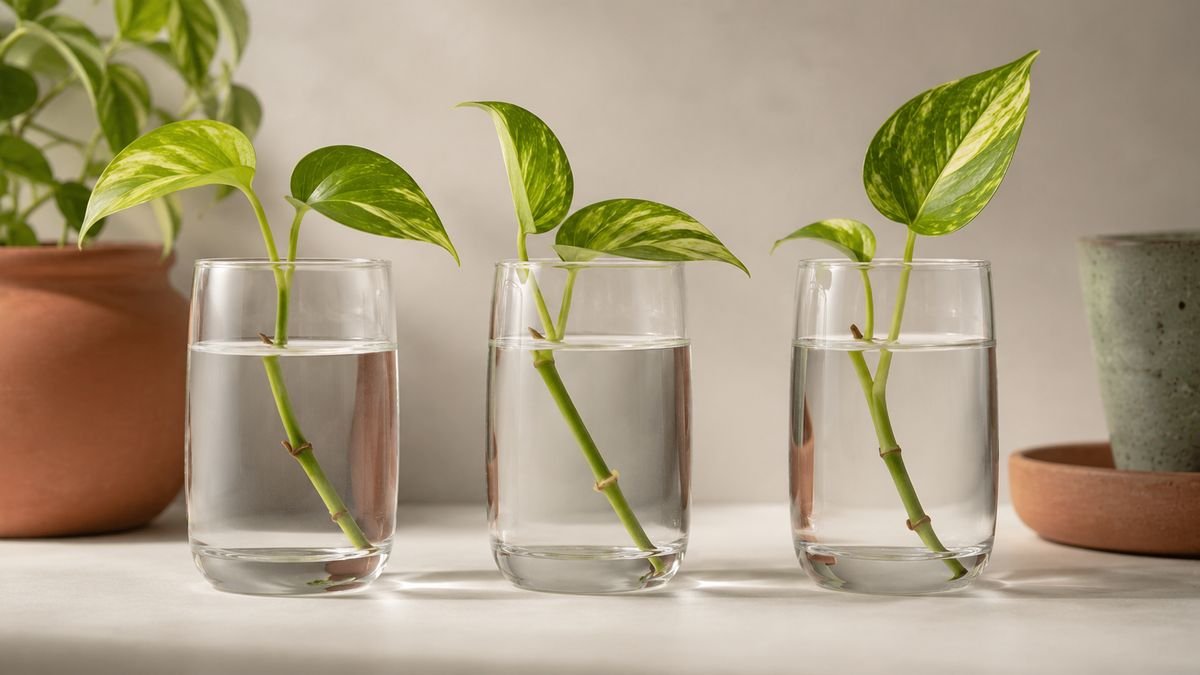
Tap water works for nearly everything. It's treated to be safe, it's at a sensible pH, and it contains trace minerals cuttings can use. The two things people worry about are chlorine and chloramine — added to keep tap water clean — but the levels are low, and chlorine in particular dissipates on its own if you let a glass of water sit out for a few hours before using it. For casual propagation, you can honestly just use the tap and move on.
The real culprits
When water genuinely does cause trouble, it's usually one of these, not "tap water" in general:
- Chloramine — unlike chlorine, it doesn't evaporate by sitting out. In areas with heavily chloraminated water, sensitive cuttings can occasionally struggle, though most still root fine.
- High mineral / very hard water — extremely hard water can leave deposits, but it rarely stops cuttings rooting.
- Softened water — water run through a salt-based softener is the one to avoid, as the added sodium isn't plant-friendly. Use an unsoftened tap instead.
Notice that plain, moderately hard tap water isn't on the problem list. If cuttings keep failing, the cause is far more often stale water, no node submerged, or rot than it is your water supply — our guide on why cuttings rot covers the usual suspects.
When to switch water
| Your situation | Best choice |
|---|---|
| Normal tap water | Just use the tap |
| Heavily chloraminated supply | Filtered or rainwater for sensitive plants |
| Very hard water | Tap is fine; filtered if deposits bother you |
| Softened (salt) water | Avoid — use an unsoftened tap or rainwater |
| Fussy or rare cuttings | Rainwater or filtered as insurance |
Rainwater is the gentlest option and free if you can collect it — many keen propagators keep a container outside for exactly this. Filtered water (a simple carbon jug filter) removes chlorine and softens the profile a little. But both are refinements, not requirements.
The thing that matters more
Here's the factor people overlook while fretting about water type: temperature. Ice-cold water straight from the tap shocks a cutting; lukewarm or room-temperature water is far kinder and roots faster. Letting your water sit out to reach room temperature does two useful things at once — it warms up and, if it's chlorinated, some of that chlorine escapes. That single habit does more good than switching between tap, filtered and rainwater ever will. And whatever water you use, changing it every few days to keep it fresh and oxygenated (as in the water propagation walkthrough) beats any upgrade in water quality.
Common questions
Can I use tap water to propagate cuttings?
Yes, for almost all houseplants. Tap water is treated, sensibly balanced and contains useful trace minerals. Only softened (salt) water is best avoided.
Should I let tap water sit before using it?
It helps a little — sitting lets chlorine escape and the water reach room temperature, which cuttings prefer. It's a good habit but not strictly essential.
Is rainwater better for cuttings?
It's the gentlest option and free if you collect it, but most cuttings root just as well in tap water. Save rainwater for fussy or rare plants as insurance.
Why do my cuttings keep failing if my water is fine?
Usually it's not the water. Stale water, no node submerged, submerged leaves or general rot are far more common causes — see our guide on why cuttings rot.