Succulents: Propagating from Leaves vs Offsets
 Reviewed by
 Succulents practically propagate themselves — but leaves and offsets suit different goals. Here's how each works, and the one rule that keeps them from rotting.
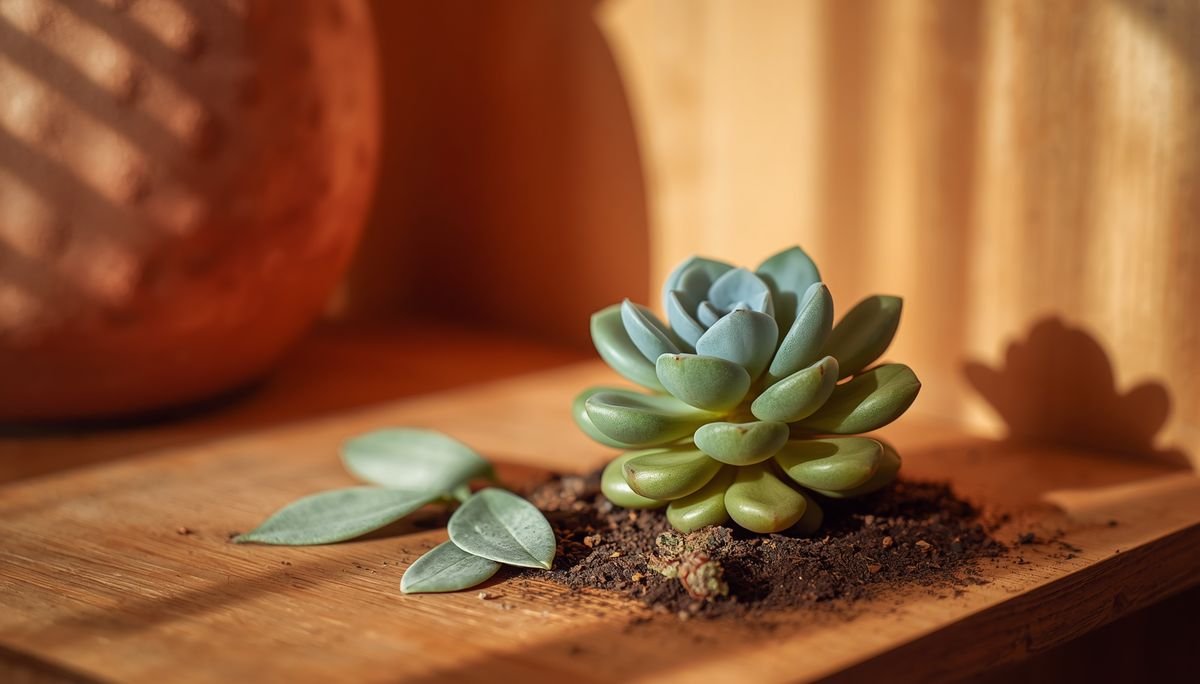
Succulents are among the most rewarding plants to multiply because they practically want to. Drop a leaf on some soil and, given time, it grows a whole new plant. But there are really two distinct methods — leaves and offsets — and they suit different goals. Here's how each works and when to pick it.
Two ways, two outcomes
- Leaf propagation — remove a single leaf and grow an entirely new plant from it. Slower, but you can make lots of plants from one rosette.
- Offsets (pups) — the baby rosettes a mature succulent grows around its base. Faster, since they're already partly formed, and guaranteed identical to the parent.
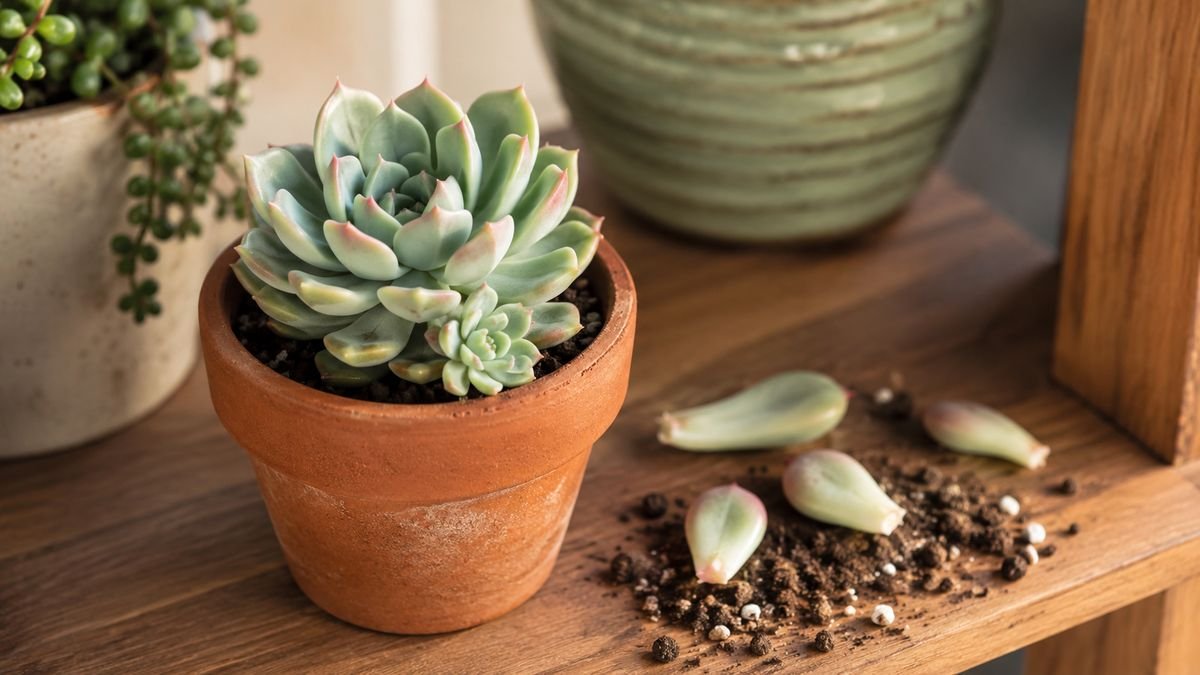
Leaf propagation
This is the classic succulent trick, and it's almost foolproof if you're patient.
Twist off a healthy leaf
Gently wiggle a plump, undamaged leaf until it comes away whole with its base intact. A torn base won't sprout.
Let it callus
Rest the leaf in a dry, shaded spot for a day or two until the cut end dries and seals over.
Lay it on gritty soil
Set the leaf on top of a well-draining mix — don't bury it. Bright indirect light, no harsh sun.
Mist occasionally
A light mist every few days is enough. Roots come first, then a tiny rosette at the base.
Pot the pup, let the leaf fade
Once the baby rosette has its own roots, pot it up. The original leaf naturally shrivels — that's normal.
The broader technique across other plants lives in our leaf propagation guide, and a light, gritty propagation mix makes all the difference to succulent success.
Offsets (pups)
Many mature succulents — echeveria, aloe, haworthia, sempervivum — grow little clone rosettes around their base. These offsets are the fast track. Simply separate a pup that has started forming its own roots, let any cut surface callus for a day, and pot it into gritty mix. Because it's already partway to being a plant, an offset establishes far quicker than a leaf and is a guaranteed match for the parent.
The callus rule
Whether you use leaves or offsets, one rule protects you from the most common failure: always let cut surfaces dry and callus before they touch soil. A fresh, wet wound sitting on damp mix is an open door to rot. A day or two of drying seals it. Combine that with a gritty, free-draining medium and gentle watering, and succulent propagation becomes genuinely hard to mess up. If pieces still go soft and translucent, that's rot — the same fix in our why cuttings rot guide applies.
Which should you use?
Go with leaves when you want many plants from one succulent and don't mind waiting weeks. Go with offsets when you want a fast, sure result and the parent has produced pups. Many people do both at once — pot the offsets for quick wins and start a tray of leaves for the long game. For realistic timings, our propagation timelines chart sets expectations.
Common questions
Is leaf or offset propagation faster?
Offsets are faster because they're already partly formed rosettes with a head start. Leaves are slower but let you make many more plants from a single succulent.
Do succulent leaves root in water?
They can, but they strongly prefer resting on gritty soil. Water tends to make succulent leaves rot, so soil is the safer bet.
Why did my succulent leaf rot?
Almost always skipping the callus step or keeping the soil too wet. Let the leaf dry for a day or two first, and mist lightly rather than soaking.
Will the new plant look like the parent?
Yes. Both leaves and offsets are clones, so the new succulent matches the parent variety.