Monstera Propagation: Node vs Wet Stick vs Air Layer
 Reviewed by
 Most failed monstera cuttings come down to one missed detail. Fix that, and monstera is genuinely easy — here are the three working methods, honestly compared.
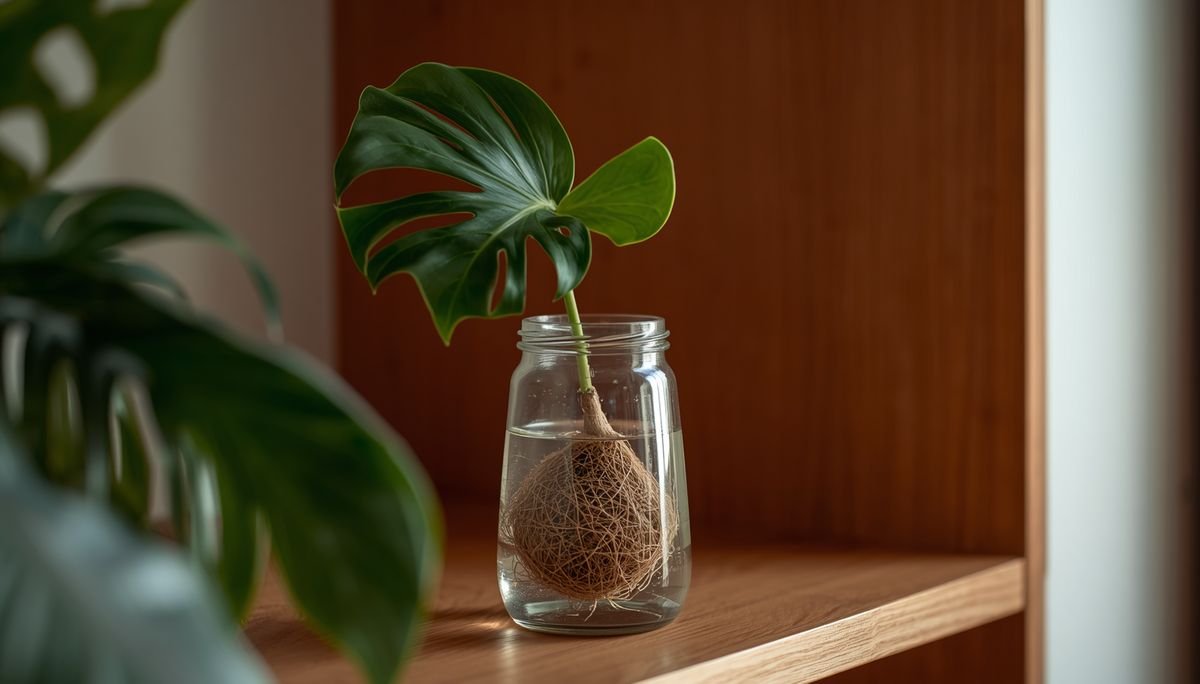
Monstera is one of the most propagated houseplants in the world, and also one of the most misunderstood. People cut a beautiful leaf, pop it in water, and wait forever for roots that never come. The fix is a single rule — and once you know it, monstera is genuinely easy. Here are the three methods that work, honestly compared.
The one rule for monstera
A monstera cutting must include a node. A leaf alone — even a huge, fenestrated, gorgeous one — has no node, so it can live in water for months looking fine while producing exactly zero roots and never becoming a plant. The node is the knobby joint on the stem where a leaf and often an aerial root emerge. No node, no new plant. That's the whole secret, and it's why our stem cuttings guide is worth a read first.
Three methods compared
All three start with a node. They differ in what else is attached and how fast they establish.
| Method | Best for | Speed |
|---|---|---|
| Node cutting (with leaf) | Most people, most cuttings | Fast, reliable |
| Wet stick (node, no leaf) | Bare stem sections, more plants | Slower |
| Air layering | Large or precious plants | Slowest, safest |
Node cutting in water
This is the standard method and the one to start with.
Cut below a node
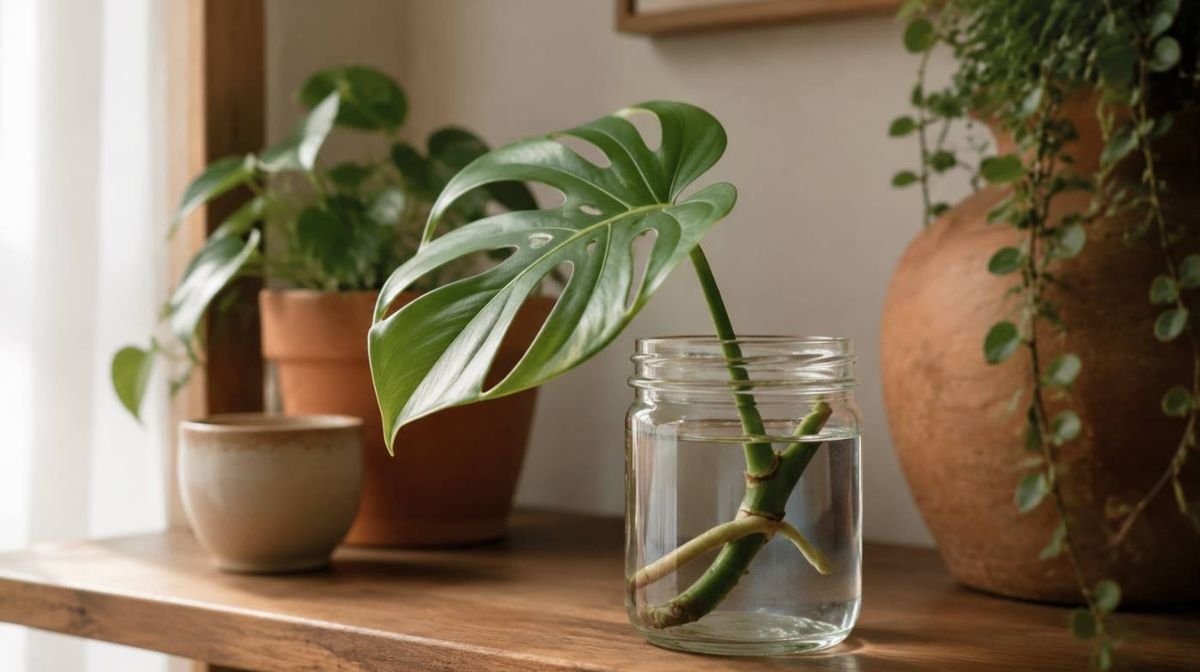
Choose a section with a node, a leaf, and ideally an aerial root. Cut cleanly about a centimetre below the node.
Submerge the node
Place it in a jar so the node (and aerial root, if present) sits underwater and the leaf stays above.
Bright light, fresh water
Give it bright indirect light and change the water every few days. Roots usually appear in two to four weeks.
Pot up at one to two inches
Once roots are a couple of inches long, move it into a light mix and keep it lightly moist while it settles.
The wet stick method
A "wet stick" is a node with no leaf — just a chunk of stem with a growth point. Lay or nestle it half-submerged in water or damp sphagnum moss, node down. It's slower and needs patience, because the cutting has no leaf to power itself, but it lets you turn one long bare stem into several plants. Great value if you have a leggy monstera to chop and time to wait.
Air layering
For a big, expensive or much-loved monstera you don't want to risk, air layering is the safest route. You wrap a node on the intact plant in moist moss and plastic, let it root while still attached, then cut it free as a fully rooted plant. Slowest of the three, but almost foolproof and zero-gamble.
Which should you use?
For almost everyone, a node cutting in water is the answer: fast, reliable, and you get to watch. Use a wet stick when you want maximum plants from one bare stem and don't mind waiting. Reserve air layering for large or irreplaceable specimens. If a cutting stalls or goes mushy, the culprit is nearly always a missing node or stale water — our rot guide and the realistic propagation timelines will set expectations.
Common questions
Can you propagate monstera from a leaf?
No. A leaf with no node will live in water but never grow roots or a new plant. Every monstera cutting needs a node.
Do I need an aerial root to propagate monstera?
Not strictly, but it helps. A node with an aerial root roots faster and more reliably, so include one if the cutting has it.
How long does monstera take to root?
Two to four weeks in water for a node cutting with a leaf. Wet sticks and air layering take longer. See our propagation timelines for realistic expectations.
Should I use water, moss or soil?
Water is the easiest to start with and lets you watch. Moss suits wet sticks and rot-prone cuttings, and soil works if you'd rather skip the transition — our soil vs water guide compares them.