Best Propagation Stations for Every Budget
 Reviewed by
 A good propagation station turns a cluttered windowsill into something you're happy to display. Here's how to choose one for your budget and cutting count, without overspending.
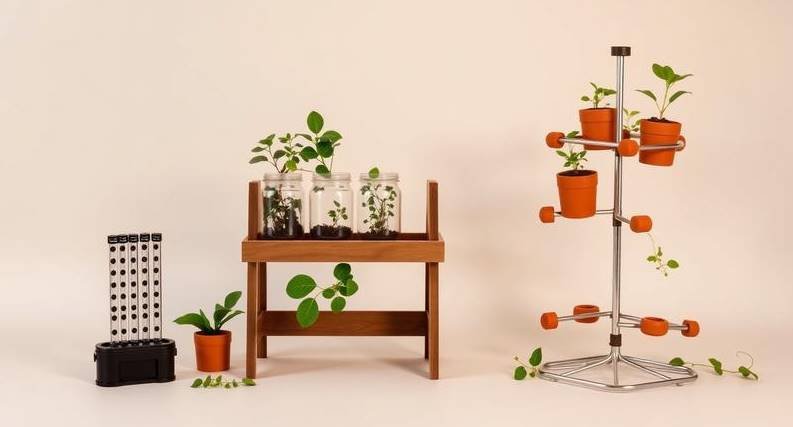
A propagation station is really just a tidy way to hold cuttings in water while they root — but a good one turns a cluttered windowsill of random glasses into something you're happy to display. Here's how to choose one for your budget and how many cuttings you actually root, without overspending.
What a propagation station is
At its simplest, it's a stand holding one or more clear vessels of water, each cradling a cutting so the node stays submerged and the leaves stay above. That's it. Everything else — the material, the number of tubes, the look — is about convenience and aesthetics, not whether your cuttings root. A free jam jar roots a pothos exactly as well as a designer stand; you're paying for tidiness and display.
What to look for
- Clear vessels. You want to see the roots and the water clarity, so glass or clear acrylic beats anything opaque.
- A stable base. Cuttings are top-heavy; a station that tips over is a daily annoyance.
- Removable vessels. You'll change the water often, so tubes or jars that lift out easily save a lot of hassle.
- The right capacity. More slots than you need looks empty; too few and you're back to scattered glasses.
Options by budget
| Budget | What you get | Best for |
|---|---|---|
| Free / DIY | Repurposed jars and bottles | Beginners, occasional cuttings |
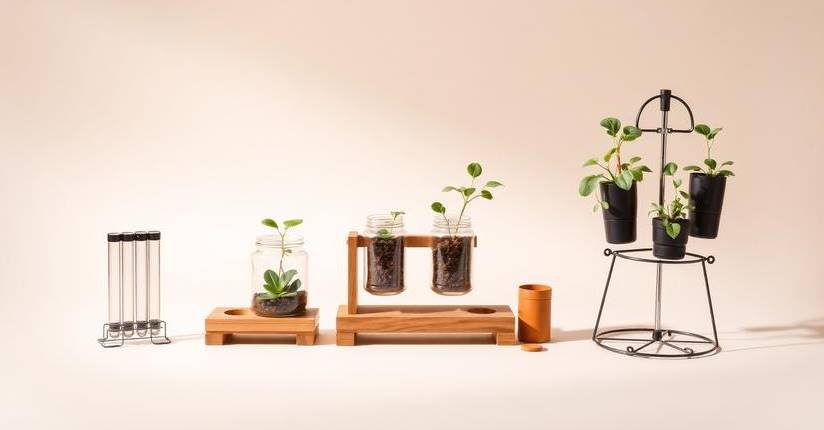
| Budget | Simple test-tube stand | A few cuttings, tidy look |
| Mid-range | Multi-jar wooden or metal rack | Regular propagators |
| Display | Statement stands, wall-mounted glass | Decor-forward plant lovers |
Honestly, most people are best served at the budget or DIY end. A test-tube stand looks lovely and costs little, and a cluster of matching jars does the same job for nothing. Only step up to display pieces if you want the station itself to be part of your decor.
Glass, test tube or wall-mount?
Glass jars/vases suit chunky cuttings and larger root systems — roomy and stable. Test tubes look elegant and are perfect for single small cuttings, but hold little water so they need topping up more often. Wall-mounted stations save surface space and look striking, though they're fiddlier to refill. Match the vessel size to your cuttings: a big monstera node needs a jar, not a slim tube.
Matching it to your needs
If you root the occasional cutting, don't buy anything — a DIY setup from jars you own is genuinely all you need, and our essential tools guide shows the minimal kit. If you propagate constantly and want it tidy, a multi-vessel rack earns its place. Whatever you choose, the fundamentals from the water propagation walkthrough stay the same: node submerged, leaves above, fresh water often. And if your tap water worries you, see tap vs filtered vs rainwater.
Common questions
Do I need a propagation station?
No. A station is a tidy, attractive convenience, not a requirement. Any clear glass of water roots cuttings just as well. Buy one for looks and organisation, not results.
What's the best budget propagation station?
A simple test-tube stand or a cluster of matching jars gives the best value. Both look clean and cost little compared to statement display pieces.
Glass jars or test tubes?
Jars suit chunky cuttings and larger roots; test tubes look elegant for single small cuttings but need topping up more often because they hold less water.
How many slots should a station have?
Match it to how many cuttings you typically root. Too many slots look empty; too few send you back to scattered glasses. Most home propagators are happy with three to six.