Propagating Spider Plant Babies the Right Way
 Reviewed by
 Spider plants hand you ready-made babies on their runners. Root them right and you'll never run out — here's when they're ready and the three easy ways to do it.
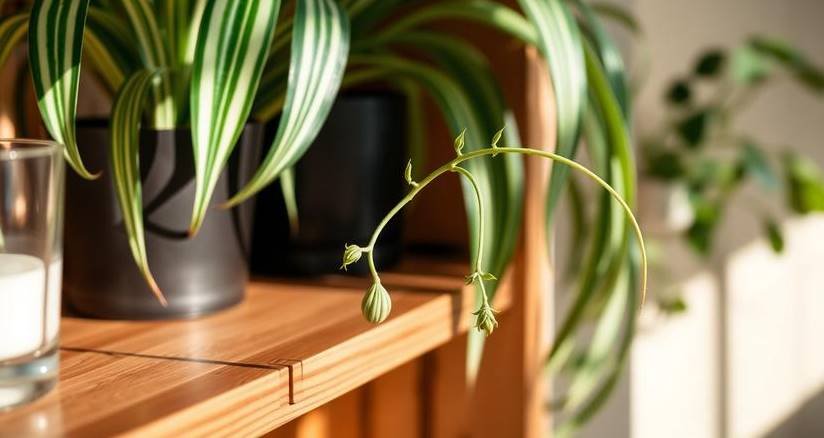
Spider plants are the gift that keeps giving. Once a plant is mature and happy, it sends out long runners tipped with perfect little baby plants — and each one is a ready-made new spider plant. Rooting them is about as easy as propagation gets, and you'll never need to buy another spider plant again.
What the babies actually are
Those dangling babies on the ends of the runners are called plantlets or spiderettes, and they're essentially miniature clones of the parent, already sprouting tiny roots of their own. Because they arrive half-formed, you're not really coaxing a bare cutting to root from scratch — you're just helping a nearly-complete plant finish the job. That head start is exactly why spider plants are so beginner-friendly.
When a baby is ready
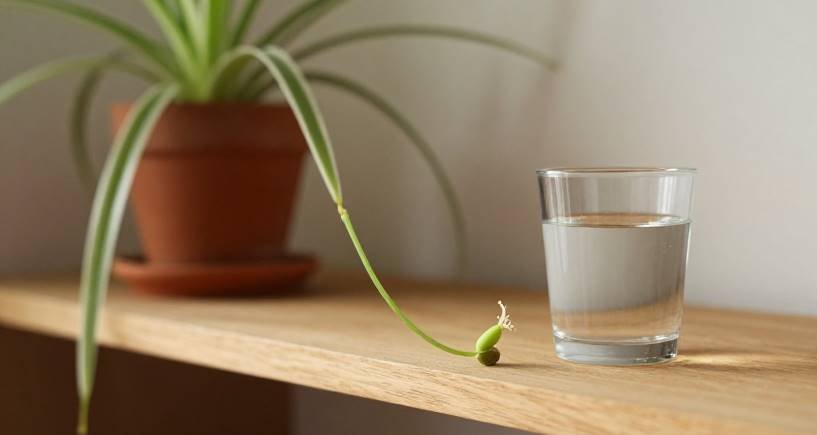
Look at the base of a plantlet. If you can see little brown or white root nubs already forming, it's ready to go — these babies root fastest. If a plantlet is still tiny and flat with no visible nubs, leave it on the runner a while longer to mature. There's no rush; the parent happily feeds its babies for as long as they stay attached.
Three ways to root them
- In water — snip a baby off and pop it in a glass. Fast and you can watch the roots grow.
- Attached to the parent — pin a baby down into a nearby pot of soil while it's still on the runner, then cut it free once rooted.
- Straight into soil — for babies with good root nubs already, plant them directly into a light mix.
Water method, step by step
Snip a mature baby
Cut a plantlet from the runner, choosing one with visible root nubs for the fastest results.
Sit it in water
Rest the baby in a small glass so its base and root nubs touch the water, leaves above. Bright indirect light.
Refresh the water
Change it every few days. Roots lengthen quickly — often within one to two weeks.
Pot up
Once roots are an inch or two long, plant the baby in a light potting mix and keep it lightly moist while it settles.
The attached method
If you'd rather skip any transition stress, root the baby while it's still connected to the parent. Set a small pot of moist soil next to the plant, nestle a plantlet onto the surface (a bent paperclip or hairpin holds it in place), and leave it attached to the runner. The parent keeps feeding it while it grows roots into the new pot. Once it's clearly rooted and growing, snip the runner and you have an independent plant with zero shock. It's the gentlest method, borrowing the same logic as air layering — root first, separate later.
For the main clumping plant itself, you can also divide it at repotting time for even more plants.
Common questions
How do I root spider plant babies?
Snip a plantlet with visible root nubs and root it in water, in soil, or while still attached to the parent. All three work; water is the easiest to watch.
Do I cut the baby off before or after rooting?
Either. Cut first and root in water or soil, or leave it attached and pin it into a nearby pot, then cut once it has rooted. The attached method causes the least shock.
Why isn't my spider plant making babies?
Plants usually need to be mature and slightly root-bound before they send out runners. Bright indirect light and a snug pot encourage babies.
How long do spider plant babies take to root?
Fast — often one to two weeks in water for babies that already have root nubs. They're among the quickest houseplants to propagate.